
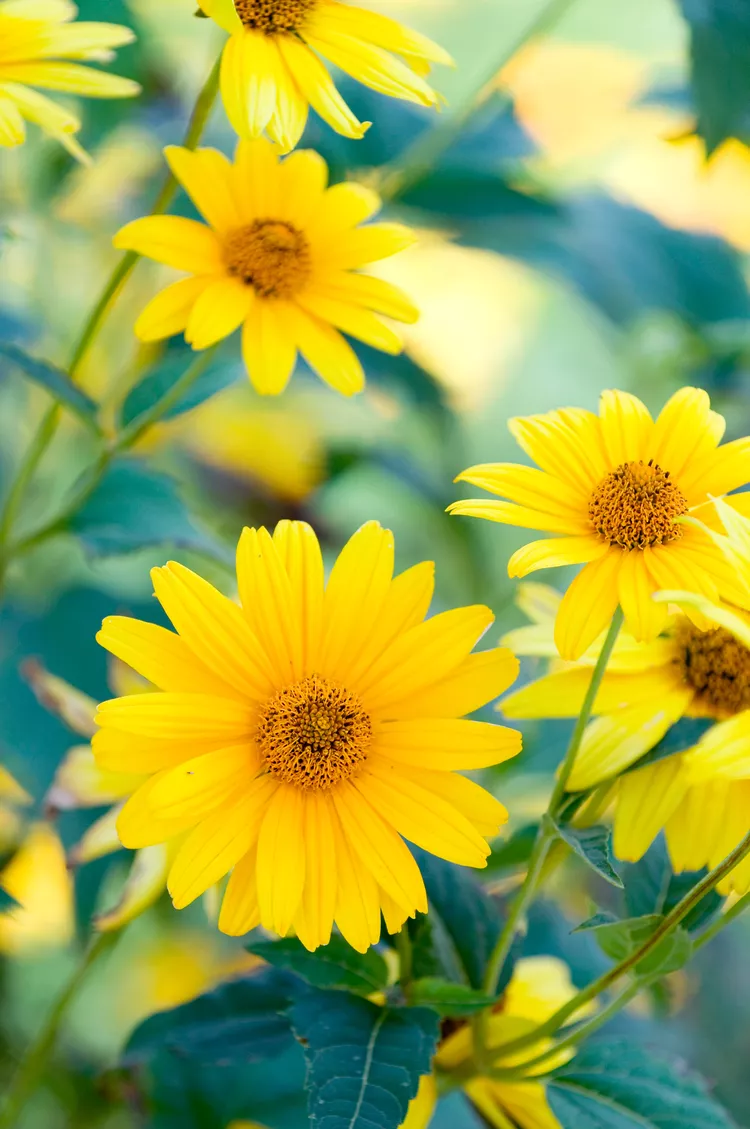
Jerusalem artichoke (Helianthus tuberosa) is a root crop native to eastern North America. The edible tuber has a flavor similar to an artichoke, but isn't at all related. The first part of its common name may come from the sound of its name in Italian, girasole, meaning “turning to the sun.” This plant produces many daisy-like flowers that sway in the wind atop tall leafy stems. The tubers look like a cross between potatoes and ginger root. Tubers are white or tan, but a few varieties are deep pink to burgundy. Here's how to grow Jerusalem artichokes in your garden.
Jerusalem Artichoke Overview
| Genus Name | Helianthus tuberosa |
| Common Name | Jerusalem Artichoke |
| Additional Common Names | Sunchoke, Sunroot |
| Plant Type | Perennial |
| Light | Part Sun, Sun |
| Height | 6 to 12 feet |
| Width | 3 to 5 feet |
| Flower Color | Yellow |
| Foliage Color | Blue/Green |
| Special Features | Attracts Birds, Low Maintenance |
| Zones | 3, 4, 5, 6, 7, 8, 9 |
Where to Plant Jerusalem Artichoke
Plant Jerusalem artichoke in sunny spots in USDA Hardiness Zones 3-9. Plant in groups at the back of beds with other tall plants, creating cover and food for wildlife. The yellow flowers are visible from a distance.
When growing to harvest the tubers, plant them in rich soil in an undisturbed area of the garden. Each fall, dig out the tubers, preferably after the first frost. Plant this tall perennial on the north side of other plants to avoid shading the rest of the garden.
Although Jerusalem artichoke is native to the eastern U.S. states, it can grow aggressively and take over gardens. Once planted in a garden, Jerusalem artichoke is challenging to remove.
How and When to Plant Jerusalem Artichoke
Jerusalem artichokes are sold and planted as tubers, not seed. When possible, gardeners should plant local stock that is adapted to your growing conditions. They grow best in full sun and well-drained soil with a lot of organic matter. Buy the tubers in garden centers or through vegetable garden catalogs. They are available in fall and spring.
Plant the tubers after the last spring frost date or in the fall while the soil is still workable. Add a thick mulch layer in areas with cold winters. Plant the tubers 2 feet apart and 4 inches deep. Consider dedicating a bed to them in an area where you can keep them under control. Dig in the fall to harvest mature tubers, and leave those not dug to sprout in the spring. The plant develops tubers before it flowers; these can be dug early. The lack of flowers does not affect tuber development.
Jerusalem Artichoke Care Tips
Light
Choose a spot in full to partial sun. Six hours of direct sunlight a day is preferable for tuber production.
Soil and Water
Jerusalem artichokes thrive in moist soil but should be planted in a well-drained garden. Water the plants in times of drought and mulch around them to suppress weeds and keep the soil moist.
Temperature and Humidity
Jerusalem artichokes grow best in a temperature range of 60°F to 90°F. In colder climates, apply a thick layer of mulch for winter protection.
Fertilizer
Fertilizer isn’t usually needed when growing Jerusalem artichokes, but add organic matter such as compost if your soil is poor.
Pruning
Because these plants are so tall, they can be damaged by wind, or they may overshadow nearby plants. Cut the plant back to 4-5 feet in mid-summer, and it will bush out, creating a more compact plant. Tuber production is not affected.
Pests and Problems
Rust, leaf spot, and powdery mildew are minor problems of Jerusalem artichoke. Caterpillars are known to chew on the foliage.
How to Propagate Jerusalem Artichoke
Jerusalem artichokes spread through rhizomes. Unless you harvest every fragment of rhizome or tuber, those remaining will grow into new plants the following season.
Types of Jerusalem Artichoke
There are many varieties of Jerusalem artichoke, but only a few are available commercially in the U.S.
‘Stampede’
Helianthus tuberosa ‘Stampede’ is one of the most popular varieties of Jerusalem artichoke because it matures quicker than other varieties and produces larger tubers. This plant grows 8–12 feet tall, so it may need to be staked to prevent it from falling over.
‘Clearwater’
Helianthus tuberosa ‘Clearwater’ tubers are mostly smooth with creamy white flesh. The tubers are sweet and not starchy, two characteristics that make them useful in several ways. In addition to being eaten raw or fried, they can be enjoyed as a dessert when caramelized. The plant grows 7–8 feet tall.
‘White Fuseau’
Helianthus tuberosa ‘White Fuseau’ is incredibly vigorous and fruitful, producing up to 100 pounds of tubers in one season. The tubers have a fingerling shape and can be used as substitutes for potatoes, whether cooked, boiled, or sauteed. ‘Fuseau’ grows 8–10 feet tall.
Jerusalem Artichoke Companion Plants
Plant Jerusalem artichoke with other tall native plants in a naturalistic garden or the back of a border garden.
Brown-Eyed Susan
Brown-eyed Susan (Rudbeckia triloba) is a North American native biennial or short-lived perennial. It grows up to 5 feet high in sun and partial shade on many-branched stems and with numerous yellow flowers. Zones 4-7
New England Aster
New England aster (Symphyotrichum novae-angliae) is a common wildflower that attracts bees, butterflies, and parasitic wasps that control native pests. It can grow up to 6 feet tall and has flowers ranging from lavender to blue to white. Zones 4–8
Compass Plant
Compass plant (Silphium laciniatum) is a tall, coarse, sunflower-like perennial that grows to 9 feet high. The flowers usually orient themselves north and south to avoid the heat of the midday sun. Zones 3–9
Goldenrod
Taller types of goldenrod (Solidago spp.) work well with Jerusalem artichoke. Small yellow flowers appear in late summer, attracting pollinators. Zones 3–9