
• HOME
  • Container Gardens
  • Houseplants
  • Edible Gardening
  • Garden Design
  • Caring for Your Yard
  • Flowers
  • Pest & Problem Fixes
  • Trees, Shrubs & Vines
  • Landscaping
  • Garden Plans
  • Gardening Routine
  • Terms of Use
  • About Us
  • Privacy Policy
frostwood.topfrostwood.top
  • HOME
  • Container Gardens
  • Houseplants
  • Edible Gardening
  • Garden Design
  • Caring for Your Yard
  • Flowers
  • Pest & Problem Fixes
  • Trees, Shrubs & Vines
  • Landscaping
  • Garden Plans
  • Gardening Routine
frostwood.top frostwood.top
frostwood.top » Trees, Shrubs & Vines » How to Build a Living Fence for Privacy and Beauty
Trees, Shrubs & Vines

How to Build a Living Fence for Privacy and Beauty

11.7K
116
34
How to Build a Living Fence for Privacy and Beauty
Project Overview
  • Working Time: 4 hours
  • Skill Level: Intermediate
  • Estimated Cost: $100 to $150
  • Yield: Planted 8-foot fence

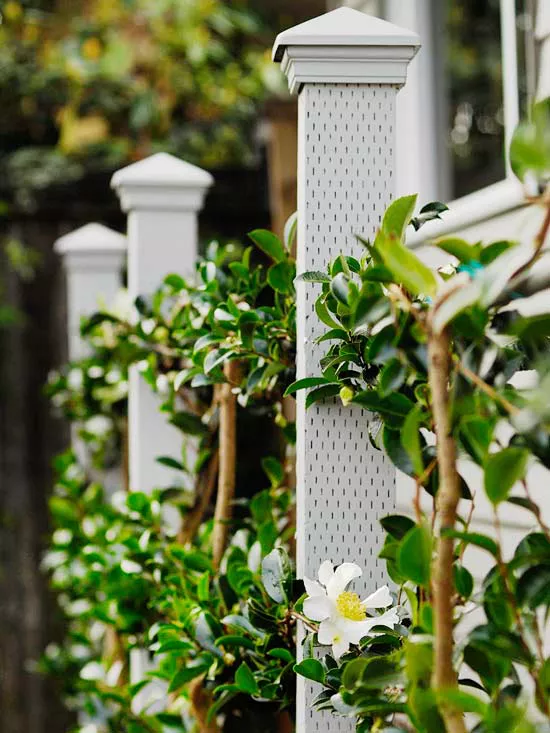
Using standard pruning techniques, you can train dwarf fruit trees to form a living fence to enhance your yard's privacy and provide beauty and fresh produce. In a living fence, or espalier (pronounced es-PAL-yay), plants grow along a usually flat, symmetrical framework against a wall, trellis, or freestanding support. Frequent pruning and tying of new growth direct the plants into a decorative pattern, such as intersecting diamonds or horizontal arms or elbows.

Plan your espalier to meet your needs. For example, if you want fruit, select a peach, dwarf apple, or pear that is rock-solid hardy in your area. Or choose a blooming tree or shrub such as flowering crabapple, magnolia, or doublefile viburnum (Japanese snowball) for a purely ornamental living fence.

Although creating an espalier isn't particularly difficult, it does take time. Expect to wait three years for fruit, and plan to spend some time each year doing light pruning and training of branches.

What You'll Need

Equipment / Tools

  • Posthole digger (optional)
  • Hand pruners

Materials

  • Three or more plants (dwarf fruit trees, for example)
  • 4x4 posts (treated for soil contact or rot resistant cedar or similar wood)
  • 2x4 top rail, 8 feet long
  • 14-gauge wire
  • Cloth-covered wire plant ties

Instructions

How to Build a Living Fence

  1. Create a Support

    Select an overall pattern for your living fence. (For our example, we selected a diamond pattern.) Build an appropriate framework of posts (8 feet apart), a top rail, and heavy-gauge wire horizontal supports. Stretch wire tautly from post to post, spaced vertically at 1-foot intervals, to create a framework. If you train trees against a wall, leave 12 inches between the structure and the support system to allow for maintenance and air circulation. Plant 2- or 3-year-old dwarf trees at least an arm's length apart.

  2. Anchor the Plants

    Make planting holes at least twice the diameter of the plant's root ball. Plant trees slightly in front of the wire supports. Refill the planting holes and water thoroughly. Water young trees weekly during their first summer and fall if rain is lacking. Cut off branches extending to the back or front; leave branches reaching to the sides.

    If you train trees along a wall, position a nail or an eye hook in the wall near intersecting branches. Loosely twist a plant tie around the branches and the hook.

  3. Train the Plants

    Crisscross branches from neighboring trees to train them into the desired pattern for your living fence. Twist a plant tie around the branches and the wire to secure them, leaving room for branch growth. Over the next three or so years, prune and train trees in late winter. As the trees grow, continue to cross and tie the branches to the framework, snipping unwanted growth to maintain the pattern. Remove fruit buds for the first two years to concentrate the tree's energy into growing branches. Look for fruit in the third year.

Garden and Deck Privacy Ideas

  • Patio Privacy Ideas to Help You Create an Outdoor Oasis
  • Garden Privacy Ideas that Incorporate Landscaping and Hardscaping
  • 18 Deck Privacy Ideas to Create a Secluded Backyard Retreat
  • 7 Landscape Solutions to Make Your Backyard More Private
  • 20 Best Evergreen Trees for Privacy and Year-Round Greenery

Related Posts

4.8K
480
235

16 Pretty and Simple Combinations of Window Box Flowers for Shade

32.9K
3.3K
985

The 3 Best Types of Berries to Grow in Containers, and How to Grow Them

37.2K
3K
980

9 Terrarium Fairy Garden Ideas That Are Utterly Adorable

21.5K
1.7K
361

Transform Your Indoor Space with a Handmade Plant Stand

29.8K
2.1K
855

The Secret to Thriving House Ferns

19.2K
1.3K
496

The Enchanting Fusion in Connecticut's Gardens

32.9K
657
223

25 Top Plant Picks from the Better Homes & Gardens Test Garden®

45.1K
451
162

How to Plant and Grow Freesia

13.5K
1.2K
278

Unleashing the Beauty of Lantana: A Gardener's Guide

9.7K
871
191

How Often—and How Long—You Should Water Your Grass

19.8K
1.4K
207

How I Boost Harvests by Succession Planting My Small Vegetable Garden

1.5K
29
4

The Colorful World of Bell Peppers: A Guide to Cultivation

41.3K
825
264

6 Ways to Get Rid of Aphids on Milkweed Without Harming Monarchs

29.9K
2.4K
1.1K

14 Weeds with Purple Flowers You Need to Know

36.1K
1.1K
248

The Enchanting Spring Messenger: Chinese Fringe Flower

21.5K
1.7K
758

Unveiling the Secrets of Heat - Loving Oleander Shrubs

32.2K
1.3K
192

Transform Your Space into a Wildlife Haven with These Garden Blueprints

33.2K
664
205

This Colorful Herb Garden Plan Enhances Your Yard and Dinner Plate

28.2K
2.5K
889

Transform Your Small Space with a Colorful Flower Oasis

21.9K
1.1K
175

15 Super Plants for Texas Landscapes

16 Pretty and Simple Combinations of Window Box Flowers for Shade
The 3 Best Types of Berries to Grow in Containers, and How to Grow Them
9 Terrarium Fairy Garden Ideas That Are Utterly Adorable
Transform Your Indoor Space with a Handmade Plant Stand
The Secret to Thriving House Ferns
The Enchanting Fusion in Connecticut's Gardens
25 Top Plant Picks from the Better Homes & Gardens Test Garden®
How to Plant and Grow Freesia
Unleashing the Beauty of Lantana: A Gardener's Guide
How Often—and How Long—You Should Water Your Grass
How I Boost Harvests by Succession Planting My Small Vegetable Garden
The Colorful World of Bell Peppers: A Guide to Cultivation
6 Ways to Get Rid of Aphids on Milkweed Without Harming Monarchs
14 Weeds with Purple Flowers You Need to Know
The Enchanting Spring Messenger: Chinese Fringe Flower
Unveiling the Secrets of Heat - Loving Oleander Shrubs
Transform Your Space into a Wildlife Haven with These Garden Blueprints
This Colorful Herb Garden Plan Enhances Your Yard and Dinner Plate
Transform Your Small Space with a Colorful Flower Oasis
15 Super Plants for Texas Landscapes
frostwood.top ©2026
  • Terms of Use
  • About Us
  • Privacy Policy