
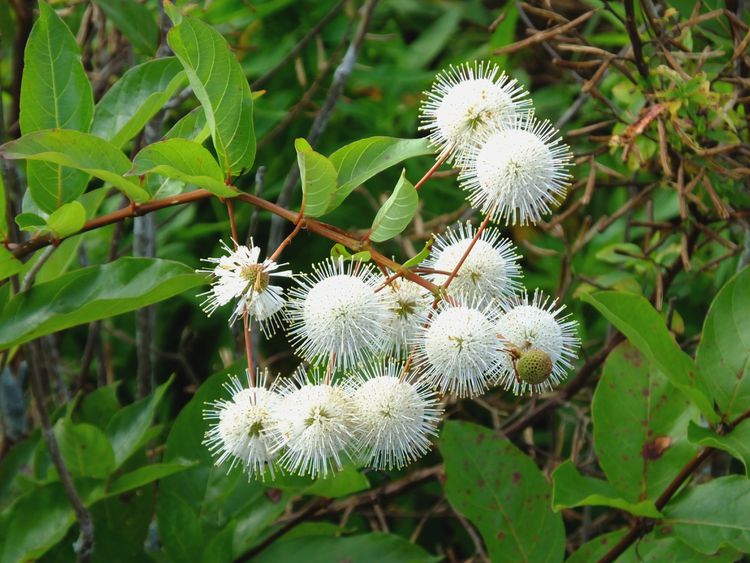
Buttonbush, also known as the “common buttonbush,” is a native species of shrub deserving of far more widespread use in landscapes around the United States. They can be planted in gardens of just about any size or style and take well to pruning for shape, but can also be allowed to grow naturally without becoming overbearing. Buttonbush is also ideal for pollinator gardens, providing an ample supply of flowers for native pollinators like hummingbirds and butterflies. Well adapted to a variety of environments, buttonbushes are also very hardy, easy to grow, and excellent for attracting wildlife to the garden, while being deer and rabbit resistant.
Buttonbush Overview
| Genus Name | Cephalanthus occidentalis |
| Common Name | Buttonbush |
| Plant Type | Shrub |
| Light | Part Sun, Sun |
| Height | 6 to 12 Feet |
| Width | 5 to 8 Feet |
| Flower Color | White |
| Foliage Color | Blue/Green |
| Season Features | Colorful Fall Foliage, Summer Bloom |
| Zones | 5, 6, 7, 8, 9 |
| Propagation | Stem Cuttings |
Where to Plant Buttonbush
Buttonbush grows well in full sun to part shade. These shrubs do exceptionally well in wet and low-lying areas where many other shrubs won’t grow, like near ditches and in rain gardens.
How and When to Plant Buttonbush
Buttonbushes can be planted in spring, summer, or fall in cooler regions and also during their winter dormancy in warmer regions.
Planting buttonbushes is similar to planting most other types of bushes.
- Begin by digging a hole twice the size of the root ball.
- Place the tree in hole and backfill soil into the hole ensuring that the tree remains upright and the existing soil line is maintained. If the tree is bare root, note soil marking on bark of tree to and be sure to fully cover roots.
- Water the tree thoroughly to remove air pockets and add additional soil as necessary.
Plant Care Tips
Light
Plant buttonbushes in full sun to part shade locations. A deeper shade will lead to fewer flowers and stretched out, weaker growth.
Soil and Water
Buttonbushes grow best in loamy, fertile, moist soils, but can easily adapt to most soil types. However, it's best to avoid dry, rocky soils for these plants. Ample moisture is necessary for healthy growth, and they can even tolerate shallow, standing water.
Temperature and Humidity
These bushes grow well in warm and humid summer environments. Plants might struggle in areas with hot, dry summers or excessively severe cold winters.
Fertilizer
Regular fertilizer applications are not necessary, but will help get newly planted plants established. A single application of granular fertilizer during planting and again monthly during the first year of growth will be sufficient. Avoid fertilizing plants toward the end of the season.
Pruning
Buttonbushes don't require regular pruning, but can handle trimming to shape them and even severe pruning back to just a few inches above the soil level, should it be necessary. Established plants that have been in the ground for a number of years can benefit from the removal of dead, broken, or diseased wood.
Pests and Problems
Very few diseases are known to affect these plants.
Propagating Buttonbush
Propagation is typically done by cuttings in spring.
- Stem cuttings should be about 6 inches and made from new growth. Use a sharp sterilized pruning shear, razor, or knife. Remove all leaves aside from one or two terminal leaves just below the bud.
- Dip about two inches of new cuttings in a powdered rooting hormone and place in pre-made holes using your finger or pencil. Always use new, sterilized potting soil.
- Pat soil around the base of cuttings and gently moisten the soil.
- Keep cuttings in a warm location with bright, indirect light. Roots should appear in two or three weeks, and cuttings can be transplanted the following season after they have become established.
Companion Plants for Buttonbush
Buttonbushes are an excellent landscaping plant and work very well in both mixed borders and in rain gardens. Native herbaceous perennials such as blazing stars (Liatris spp.), coneflowers (Echinacea spp.), and milkweeds (Asclepias spp.) pair well with buttonbushes.